Multitasking: How does it affect your health and productivity?

Multitasking


 "A man capable of driving safely while kissing a beautiful young woman simply doesn't give the kiss the attention it deserves." (Quote attributed to Albert Einstein).


Recently, I participated in a debate on a social network, in which two currents had opinions on multitasking. One of them stated that it was a quality in high demand by companies today , given the complex and changing environment in which knowledge workers carry out their work. He was referring to the ability of a person to do jobs of different types. That is, he valued the fact of having different skills and abilities and knowing how to apply them correctly in his work.


I think we will all agree with this concept. Except in very specific and not very common cases in which the specialization is so extreme that the task to be carried out is only one , in the rest of the cases there will always be multitasking.


Personally, I would not call this concept multitasking, at least from a personal productivity point of view. I would call it the ability to manage different things.


The fundamental question, at least from this point of view, is   how we manage that multitasking . In other words, how we manage our attention or what we dedicate it to.


If we go back to the quote with which I started this article, driving requires attention and kissing, if it is to be done well, too. I find it hard to believe that you can pay attention to both things at the same time: either I attend the kiss or I attend the road.


There are things that can be done automatically and do not require our concentration. There are also things that require our concentration and cannot be done automatically.


To the extent that two things do not require attention, we can do them at the same time: breathe and chew gum. If one requires attention but the other does not, we can also do them: memorize a lesson and chew gum. But if both require our attention, we can no longer do them at the same time . This is so because our brain is only capable of paying attention to one thing at a time in a conscious way. Try as we might, we will not be able to memorize the lesson and perform mathematical operations at the same time. We will have to distribute our attention sequentially going from one task to another. At this moment I memorize the lesson but I stop doing operations; In the next one, I will shift my attention to the other task but I will stop attending to the effort to memorize.


In our day to day we fall too often in trying to simulate two or more tasks that require our attention. Actually, you might ask me: which ones do not require my attention in some way?


What consequences does this way of acting have? We clearly lose effectiveness , this point is very easily demonstrable. We lose it because every time we return to a previously abandoned task, our brain needs extra time to return to the situation it was in when it was abandoned for another. Furthermore, our stress level increases and our ability to concentrate decreases.


But there can also be other cases, in which we do not do simultaneous tasks but leave tasks unfinished because new inputs arrive. We act this way because the new task makes more noise in our minds, and it probably does so because its content is more emotionally charged. How many times does it happen to us that, for example: I am working on an estimate to be delivered to a client and I receive a call from another, with a claim or raising a problem? Most likely, I will leave the budget without finalizing and start to solve the call received. But ten minutes later and almost without having started the second term, my boss calls me saying that he wants to be with me right away to discuss the agenda for tomorrow's meeting. I'm in pure entropy (the order tends to the disorder if something is not done to remedy it).


Without realizing it, I have two tasks on my mind that are noisy and emotionally charged. Speaking plainly, I stressed, overwhelmed me and I will cause distraccione s . They are two incomplete tasks; If I want to retake them, I will also need extra time to relocate to them.


Acting like this has the same consequences: they make us work inefficiently and reduce our productivity , they have a significant economic cost and another more important and often not valued, such as the opportunity cost. I also call this multitasking.


This is the most unproductive, ineffective and inefficient way to work, as I will have to dedicate far more resources to finish my tasks than if I had completed them, from start to finish.


As Peter Drucker said, "If there is a secret to effectiveness, it is concentration." We will hardly reach it if we fall into multitasking.


How many times do similar things happen to you every day? Have you identified their consequences? How would you feel if you could avoid them? What are you going to do to achieve it?

Mind Evolution And Conditioning


Do individuals develop up and blossom? Or are they introduced up by any individual else? The basic expression is -"I was brought up."- Especially within the Americas and European continent the place we regularly hear individuals saying: "I was brought up Christian" or "I was brought up Jewish", these are quite common phrases and ways in which we use to outline ourselves, however I feel it is completely ridiculous and humiliating {that a} human being needs to be introduced up. You can carry up cattle however not an individual. A human being is meant to blossom by his personal nature, that's the reason we're on the highest of the pile, at the least, on this planet and in evolutionary scale, and most of the people do not appear to grasp that, or they aren't allowed to grasp by an entire lot of individuals; so that they must be "brought up".


Bringing up signifies that any individual is molding you, and molding signifies that it is a predetermined form.


No flower that blooms is similar method as one other flower which blossomed yesterday. If we apply a mould in the identical instance of the flowers, it signifies that it is at all times going to be the identical type of the flower, again and again. Right now, that appears to be the identical mould method we typically and sadly used within the present training system, the so-called religions which are working on the earth, and naturally, the household we have now grown on. They all need you to be in a sure mould; they do not need you to blossom like a wildflower. Because they're afraid of something recent occurring amongst them, they need one thing molded and acquainted to them, being totally different or unfamiliar will trigger a variety of discomfort amongst these teams. If you will have succumbed to that system, then sure, you have been molded right into a sure type, however in the event you permit your humanity to blossom you will notice, that you do not belong to any mould.


The fantastic thing about being human is that there isn't any specific solution to be: If you had been a cat, you'd be in a technique, in the event you had been a fowl, you'll be in one other method, however to be human there isn't any specific solution to be. What is human just isn't outlined, nor described; it looks as if nature drew two traces, for each different creature on this planet; inside that two traces, creatures need to play their function. But for us people, solely the underside line it is drawn, there isn't any prime line; socially, individuals are making an attempt to attract a prime line for themselves, however nature has not drawn a prime line for any of us. The prospects are limitless, and that is precisely what's freaking us, people, proper now, as a result of we won't resolve what we're going to be, as results of that, we're consistently making an attempt to be like any individual else or faux our method of being. Only the underside line is about, for our fixed evolution.


Evolution is such an summary idea these days, however we nonetheless perceive that there's multiple solution to evolve as human beings, could possibly be consciously or unconsciously. To be extra playful on this subject I'm going to ask you a query. In your expertise of life, do you discover all human beings on the identical degree of evolution?


I requested with out prejudice, however with all of the respect to each human being, there're many individuals who might really feel extra full with a tail, horns or sharp claws as a result of they're at all times looking for a solution to struggle each other for the silly issues on the earth. You can exit and drive on the road to see what I'm speaking about; Traffic is such a large number however is messier in different components of the world. Driving within the Dominican Republic (the place I'm from) might be essentially the most difficult factor, I've seen individuals driving their dream automobiles on emotional edge for the smallest issues, and they're in a lot rage; even in different international locations the place the site visitors is much extra disciplined. I see the identical rage, in each second any individual, is getting in your method the place I reside. Is like individuals are consistently making an attempt to check their horoscope; if their astrologer has instructed them -You will reside for eighty years- they'll take a look at they lifespan by driving like loopy.


People who're in such a state of rage in all probability are going to evolve over time and nature will give these claws and horns, as a result of it could be extra appropriate for his or her frame of mind and feelings. When you see this sort of individuals you are feeling like they really wish to claw any individual, however they do not have the claws to take action. Their evolutionary course of needs to be that at some point they get the claws. The examples go on and on for the totally different sort of individuals, however you in all probability perceive my sarcasm at this level.


We all people aren't in the identical degree of evolution though we're doing the identical issues as different creatures: we're born, we eat, sleep, reproduce and die similar to another creature on this planet. The one factor we will do in another way is to conduct all these quite simple points of life, consciously; from the second you're awake until the second you go to sleep, what number of ideas, feelings, and actions you conduct consciously? This will decide the state of your evolution proper now.


If you possibly can conduct these issues talked about consciously, I'm fairly positive that you'll do it in a sure method. If you are taking issues compulsively, you'll appear to be another creature on this planet. We solely appear to be on the peak of evolution once we do issues consciously, not in any other case. You have sufficient consciousness and consciousness to evolve consciously. When we had been like monkeys prior to now, we could not resolve "I'll become a human being." Cause nature was the one who pushed us. But now we're aware sufficient to resolve "I want to evolve from where I am to whatever is possible."


We should take note of all the things round us these days as a result of fashionable society is affected by an consideration deficiency syndrome brought on by individuals's thought of training. Most individuals consider that training is info, however the entire thought of the human training system has turn into to heaping you with info; the extra info you heap upon any thoughts, the extra that thoughts will develop an aversion to consideration. Because with out realizing something, info provides you a false feeling of realizing all the things and that is turning into a style these days. for instance:


If any individual invited you for a cocktail party, you possibly can Google out details about the hundred billion galaxies on the market in area; they've all been numbered and named, and also you see that the galaxy 5337BZ goes to collide with one other galaxy (You know this as a result of these had been the primary two sentences to look if you Google it) and also you go to the banquet. Whoever talks to you or say "how are you?" you possibly can say one thing like "hey! do you know about the galaxy 5337BZ that is a trillion light years away?" and also you discuss it, making individuals consider that you simply're sensible.


This is the entire drawback with our world proper now. We are mistaking info for intelligence. Anybody who needs to navigate by way of any scenario wants intelligence, not simply info, trigger the information is simply a great tool on the facet that lets you navigate by way of a specific scenario in a novel method.


Once you fill your self with an excessive amount of info, consideration turns into a significant issue. You lose the power to carry your consideration and in addition the power to entry your intelligence. You simply churn out the data from reminiscence.


You in all probability heard the story of Andrew Carnegie. When he began his enterprise in a brief period of time he turned so tremendous profitable and made a lot cash that the usgovernment suspected that he was doing a little malpractice. They arrange a Senate investigation committee and so they questioned him in each method doable and located nothing incorrect together with his enterprise; they turned determined and requested, -"How do you manage to make so much money and be so successful?-" Carnegie response was quite simple. he stated: -"My secret is that I can keep my mind focused on something for five straight minutes."- All the senators begin to take a look at themselves and requested -"What the deal is with focused the attention for five minutes?"- and so they begin to experiment amongst themselves; they could not hold it their consideration on something for various seconds and Carnegie stated -"You should not be running the United States."-


When we had been children we normally make a variety of races to see who can run quicker. But permit me to play slightly with these recollections of your working days. If you must take part in a race with your pals and I connect you three legs, you'll run slower; however with simply two legs you'd run quicker, proper? this is similar factor occurring with info, you connect one thing that's not yours to your reminiscence and identifies your self with it. The extra you do this, the much less efficient you turn into.


If you choose up an adolescent with the web, he'll in all probability know the identify of the galaxy we used within the instance however just isn't good for him, as a result of that's not information, it would not have any usefulness extra than simply boastfulness. We, people, want to understand that we have no idea even a speck within the universe correctly, not even an atom, the second you consider "I know this" you can't listen. The conceitedness of knowledge will carry you consideration deficiency.


You in all probability discover that the extra educated individuals start to be, the extra prosperous individuals turn into. They can not wait, as a result of persistence occurs to be scarcer, however individuals who do not suppose a lot of themselves reside very in another way, for instance:


If you ask a villager to return, sit and wait. He'll merely sit there and wait the entire day. But in the event you ask an informed man to do the identical factor, he'll take a look at his watch 20 occasions in a minute as a result of he can not wait, he would not have persistence as results of his mind considering an excessive amount of of himself.


I hope you perceive the proportion of who you're on this existence trigger If you do not goes to be onerous so that you can perceive that generally in life there isn't any different method than simply wait. When I say proportion I used to be referring to the comparability of our speck of existence to the infinite measurement of the cosmos. So when you've got the will of evolving, blossom and obtain nice issues on this life it's essential to have the persistence to find out how your surroundings is shaping you and find out how to break the mould you and society need to construct round your true nature as a human being.


Does Critical Thinking Change The World


As a result of what is going on around them and what they have been exposed to via the mainstream media and even social media, someone might not be happy with what is taking place. So, if they are not already doing things to change what is going on 'out there', they can look into what they can do.


It could be said that this will be the obvious thing to do and something that most people would do if they were in their position. The alternative could be seen as them just carrying on with their life and doing nothing, something that is not going to appeal to them.


Totally Overlooked


What won't enter their mind, then, is that it will be a good idea for them to take a step back and to see what part they are playing in what is going on 'out there'. If they were to do this, it would show that they are aware of how their external world is mirroring back what is going on in their inner world.


One would realise that they are not simply an observer of the world; they are actively playing a part in their experience. However, taking into account the conditioning they will have most likely received throughout their life, why would they have this understanding?


'The Truth'


From a very early age and with the help of many different sources, one will have been told, both directly and indirectly, that they are separate from what is going on 'out there'. But, even though this will just be a belief, it will be seen as the absolute truth.


Naturally, with this in place, there will be no reason for them to change their inner world to change their outer world; this won't be something that even enters their mind. Through being this way, the only way to change the world - the world that they are just observing - will be to literally change the world.


A Waste of Time


In fact, if someone was to suggest that the world is their mirror, they could just laugh, or get angry, and come to the conclusion that this person is completely crazy and deluded. Unlike them, this person could be seen as being irrational and 'out of touch' with the 'real' world.


One will understand what the world is like and how it functions and they won't have time to play around with their inner world. They could see themselves as being far too 'intelligent' to get caught up in something like this.


Endless Support


Most, if not all, of the people in their life are likely to embody the same outlook, so it's not as though they will experience self-doubt in regards to what they believe. Yet, even if they did, as they live in a society that is structured around the view that everyone and everything is separate, it would soon be snuffed out.


There is the chance that there will be at least one person in their life who is doing what they can to change the world. A lot of this of what this person does is likely to be a way for them to fight against and, thereby, resist, what is going on.


Another Element


There is another part of their being, though, that will make it easy for them to be pulled into the illusion of separation. If this part of them didn't exist, their life would be different as would the world they live in; just as their life and the world as a whole would be if this part was widely understood.


What is being spoken about here is their ego-mind, the part of them - along with the help of their eyes - that that causes them to see themselves as separate from everyone and everything. This is not a defect; it is just so that they can have their own experience on this earth.


The Big Deception


Moreover, this part of them pushes the parts of themselves that are too uncomfortable for them to acknowledge into their unconscious mind. Once this has taken place, their conscious mind can forget all about what it has lost touch with.


But, while this is the case, the material that they have lost touch with will have a big impact on how they experience life and on the circumstances and situations that they find themselves in. The trouble is that as they will see themselves as just an observer, they won't be able to see that they are playing a part in what is going on.


Two Parts


Ultimately, there are two parts of their being that co-create their reality: their conscious and their unconscious mind. Without this understanding, it will be perfectly normal for someone to see themselves as a victim and at the whim of fate.


It doesn't stop there, though, as what they push out of their conscious mind doesn't just go into their unconscious mind, it also ends up feeding into the collective unconscious. From here, what one has lost touch with will merge with all of the inner material that their fellow human being have lost touch with, and, this inner material will play a big part in what happens in the world.


Final Thoughts


Taking this into account, if one gains an understanding of how their ego-mind works and starts to heal their own inner wounds and to integrate what they have disowned, they will change their life and they will change the world. By changing themselves they won't be trying to resist what is taking place, either; something that would do more harm than good.


The reason for this is that what is resisted is what will both persist and grow. Being the change that they want to see in the world will be far more effective than solely trying to change the world 'out there'; a world that is reflecting back what is going on within them.


A Short Pencil Is Better Then A Long Memory


Have you ever gone to the grocery store meaning to pick up just a few things and walked out with half the store in your cart? When you get home you realize that you got everything except for the thing you went there for in the first place. Now think about the time you walked in with a list and walked out with exactly the things that you came into the store for without even thinking about it.


I am the type of person that has to write everything down. I have to-do lists, grocery list, calendar reminders on my cell phone and email, my goals and visions are written down and I write my thoughts in a journal. While my passion for writing is one of the reasons why I do this, it's not the only reason. I learned something a long time ago that has stuck with me. A short pencil is better than a long memory. Human memory is indeed flawed, we can easy lose track of our direction in life if we only rely on our memory to get there. When we write things down it reinforces the thoughts and makes them more "concrete."


Here's a little background on what happens in the brain based on some simple neuro-psychology. Our brains are divided into several regions that help us to process information. These include the frontal lobe which is for problem solving, emotions, behavioral control, thinking and planning. The motor cortex which is responsible for movement, the sensory cortex which is responsible for sensation, the temporal lobe which processes long term memory, the parietal lobe which makes sense of the world and helps us with spelling, arithmetic and perception and the occipital which is responsible for vision. When we write things down, we are using several of these parts of the brain but more importantly we are helping to commit this information to our long term memory. When we engage in the act of writing things down we are activating all of the parts of the brain.


One study on students, in a University setting, looked at students that took notes and students that did not take notes. The study tested these students immediately after a lecture. All the students in the study remember approximately 40% of the information presented. The difference between the two groups was that the students that took the notes remembered more of the details of the lecture. The students that did not take notes remembered random parts of the lecture. The mere act of writing helped the students to commit more details to their long term memory.


Writing is basically like a dress rehearsal for the brain. When we write things down we are helping to commit these things to our long-term memory. The mind is a tricky thing when remembering things and a concrete reference can help us to stay focused and on track. Writing it down is also a good way to keep your mind focused and to reduce the amount of stress in your life. It only takes a minute to write it down but can save you a lot of aggravations and anguish in the long run. So when you need to remember anything in life take a second and write it down.


Right Brain Learning


Many people learn well through their sense of sight. They can watch someone do something and then can duplicate the task with practice. Other people learn well through their sense of hearing, by listening to the instructions. Most people tend to learn best through a combination of their senses including those of seeing, hearing and doing. Doing is kin-esthetic or our sense of feeling. Other learning moments rely strongly on taste and smell such as when someone is striving to be a chef. For most of us, it is the feeling/doing experience that helps us to truly integrate new information and skills. Once we actively participate in whatever we are learning we progress more easily.


Many years ago I worked as an adapted P.E. Teacher in San Diego, California. Some of my students were "severely emotionally disturbed." I remember one eight year old boy who was unable to write his name. His teacher didn't know how to help him succeed since all of his previous efforts had failed. One day, I wrote the boy's name upon the ground with chalk in great big letters. I asked him to walk on top of each letter, tracing them with his body movement. Each time he did, I asked him to say the letter. After this experience he knew how to spell his name. He simply needed to integrate this information kin-esthetically. He was relaxed and having fun. This is right brain learning.


It is natural to learn through our senses. We see, hear, smell, taste and feel. These signals are received by the body before reaching the brain with conscious awareness. Children will visually study an object with great intensity. They touch things to their cheek or to their lips. They often smell or taste things. Why do infants put everything in their mouth? It is because they are learning about the world around them through their tongue. They touch and feel in much broader ways because it is natural. They learn through their senses first and then they learn how to think. We are all this way. Sensory learning is primary and logical learning is secondary. When we use more or our mind's natural abilities for learning we have greater resources for creating successful results.


There are four parts to the learning process:

1. The teacher's part is that of sharing the information.

2. The student's part is to focus on what is happening.

3. The student's part is to receive and hopefully integrate the new information.

4. The student's part is to recall the information when needed, such as when taking a test or when useful in a real life situation.


Regarding #1, the teacher's part of sharing information, it is interesting to note that when we are children in kindergarten we are cheerfully led to learn new things through engaging our senses. We learn our ABC's through song, we learn the months and how many days they have through a rhyme "30 days has September, April June and November... " We learn simple addition and subtraction by counting items such as blocks or sticks as we move them from one place to another. We are actively engaged through sensory awareness.


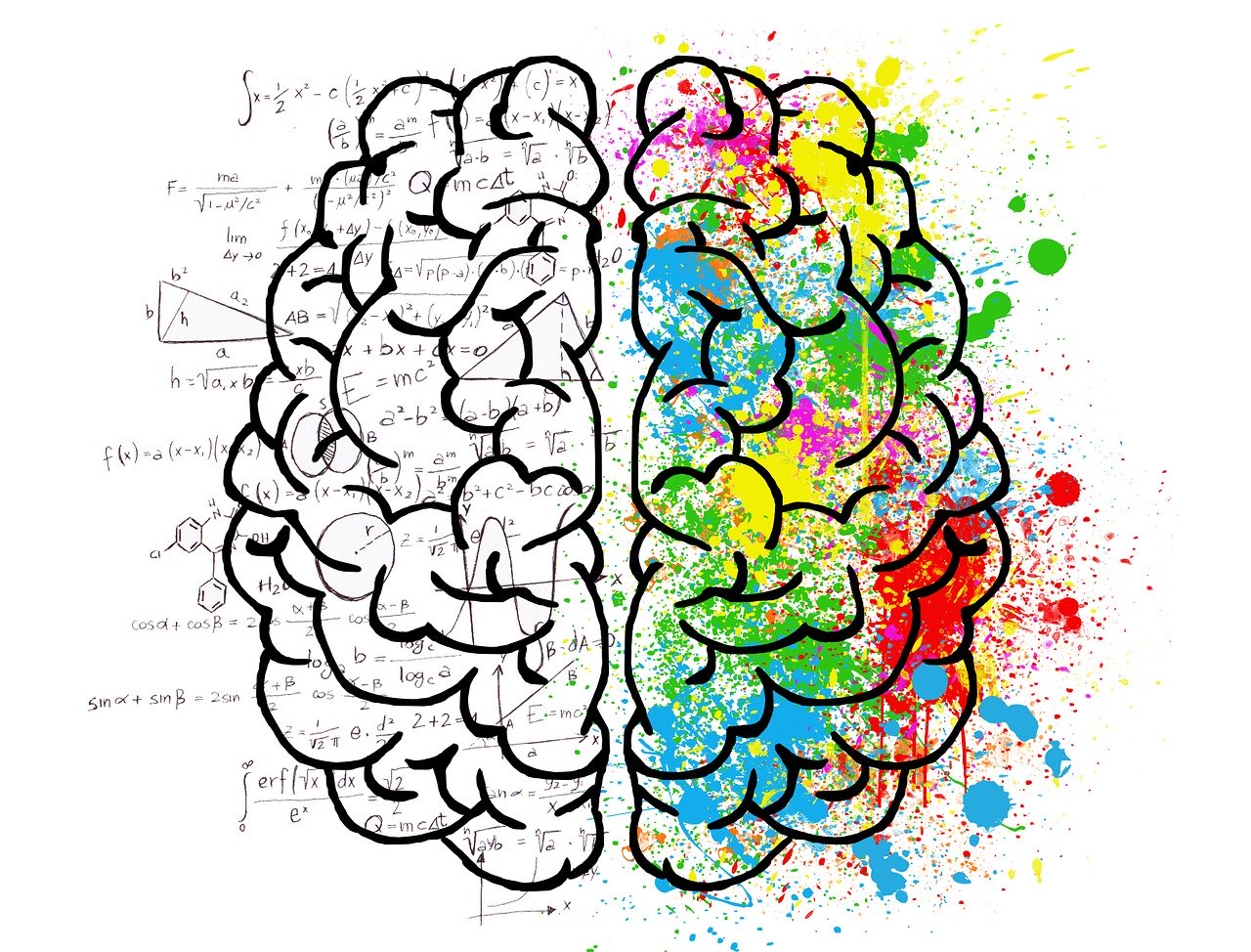
Some of these tactile learning skills remain through first and second grade but often by the third grade most teaching shifts from right brain teaching to left brain teaching. This means it changes from primarily sensory learning to secondary logical learning. Now we are taught to memorize the times tables, or names or dates and math is nothing more than numbers on paper. There is a better way.


Learning through right brain sensory awareness is primary.

Learning through left brain intellectual concepts is secondary.


Studies show that when children engage in right brain activities such as music or dance, they do better with left brain activities such as math and English. When we teach children through right brain approaches, they are more stimulated and excited. Rather than feeling bored they can learn in a way that is engaging and pleasing.


Let's look at #2, the student's ability to focus. The lack of this ability is often labeled as ADD or ADHD. I feel strongly that it is unrealistic to expect a young child to sit in a chair for many hours every day as his or her brain is fed information. Many children are given medication so that they can manage to fit into this very unnatural mold. Young animals are active and energetic naturally. Another common influence behind this problem is that of a lack of sleep. When children are tired they have to overstimulate themselves just so that they can remain awake.


Consider a young child who has spent most of his or her time at home where the environment tends to be peaceful. Even with siblings, the amount of external stimulation is limited. Now this same child is three or four or five years old and they are placed in a room with twenty or twenty-five other children. This child hasn't any experience with learning how to block out so much external stimulation. Even if the room is quiet, many children are highly sensitive and they can feel the abundance of energy in the classroom.


Why do we expect that all children can automatically focus in the classroom when most of them have never had a chance to learn how to do so?


Right Brain and Strength of Memory

Using the following story, I'd like to build upon the idea of using sensory learning for greater integration of information and for ease of recalling the information at a later time. When we use our senses it makes it easier to recall the information when needed.


"You're riding your bike and you see a shiny piece of quartz crystal on the ground. You stop and pick it up. You hold it up to the sunlight and you can see a small rainbow deep inside. Now you come to a large fountain with something unusual on top. The water is flowing down into 3 pools. There are pennies and coins in each pool. You make a wish and toss your piece of quartz crystal in the water. It sparkles in the water."


Sensory Integration

* You're riding your bike - Imagine this in your mind's eye. Feel it. What kind of bike is it? What color is your bike?

* You see the shiny quartz crystal - What shape, size etc.

* You hold it up to the sunlight - Feel the sun shining on your face.

*You see a small rainbow inside - Describe it to me. (See it.)

* You come to a fountain with something unusual on top. What's on top? Describe it to me. (See it)

* The water is flowing down into 3 pools of water filled with pennies and coins (See it. See the coins shimmering beneath the water. Feel the water splashing on your face.)

* Imagine making a wish and throwing your crystal in the water where is sparkles in the sunlight.


I tell this story two or three times while asking the child to be engaged through his or her imagination. Then, I ask the child to tell me the story. Most children find this is easy for them to do and they tend to be quite accurate in recalling the key elements. This is independent of how much time passes. Even weeks later, they are still able to retell the story with relative ease.


I have used the following ideas to help children learn to focus more effectively:


Laser Beam

First, we talk about laser beams. A laser bean takes scattered electrons that randomly flow and it moves them all in one direction. Rather than being scattered the electrons form a line of energy, a laser that is powerful enough to burn a hole through steal or gentle enough to do delicate eye surgery. What started from scattered chaos becomes focused and useful.


Then we talk about how the mind is like that. It can either be scattered or it can be like a laser beam. When it's like a laser beam, it has a lot of power. I further mention that when they are listening to their teacher or focusing on school work, that is the best time for their mind to be like a laser beam. Then we can engage in the following activity:


Laser Beam Activity

Sit directly across from the child you are helping, eye to eye when possible. Tell him or her to be like a laser beam. All they can do is to focus on you and your voice. No matter what else happens around them, they are more focused on you and what they are learning. Now retell the short story.


Next we add some external stimulation. I have another person stand behind the child who is seated. This person's job is to be a distraction. They can talk or jump or clap etc. They continue to do this while you re-tell the story. You can give the suggestion, "No matter how much goes on around you, you focus more like a laser beam. You focus like a laser beam and nothing bothers or disturbs you." This continues several times through and each time the level of distractions are increased. Lastly, have the child tell you the story to see how well they were able to focus on you, independent of the distractions. This process can be repeated with other stories and great results can be found when we use information that the child needs to learn for school. We can take their most challenging subject area and turn it into a successful and enjoyable experience.


Following is a real life example to show how this same sensory learning can work in more advanced learning situations for adults.


I worked with a client who was in her fifty's when she decided to start a new career. She wanted to become an accountant. She felt overwhelmed with the amount of information she needed to learn and was greatly concerned about being able to pass her test. Now, nothing can be further away from creative influences than that of accounting and numbers, yet we were able to use right brain strengths in her learning process.


In her imagination we created a neighborhood. In the first house lived a single mother with two children. We placed the necessary tax information on the door and around the house. We threaded it into this single mother's life. Next store was a man who worked at home. Again, we imagined this man, what he did and what tax benefits he earned for working at home. For example, "He's allowed to write off 'x' percentage of his utilities" became an image of his lights throughout the house, each one displaying the number representing the allowed percentage for tax benefits. Soon we had an entire neighborhood complete with clues for most of the needed information.


I am happy to say this client past her test the first time through! She felt calm and capable throughout. The information she needed was easy to recall and instead of being stressed she had a enjoyable time.


These few examples demonstrate ways of bringing right brain, sensory processing into learning. Here are a few basic thoughts to keep in mind as you progress:

* Make the images as real as you can - feel like it is really happening.

* The sillier the image the easier it is to recall the information. (Think about the Geico gecko.)

* Connect one idea to another so that they form a storyline.

* Make up a song or a rhyme to remember the information.

* Relax and enjoy the process!


When we use more of our mind for learning, then learning is fun and easy. Relaxation and enjoyment allow for new information to be integrated and accessed far more easily. Imagine how different our educational system would be if we decided to embrace this natural way of learning! Are you ready to experience what your brain can do for you?


Revealed, The Top Online Puzzles and Games Websites for Mental Well being


Scientists at the University of California's Berkeley campus have recently concluded that there is a direct link between the regular mental exercise of things like puzzles and mental well being, much like the link with physical exercise and physical health. They looked at 65 healthy elderly people, whose average age was 76, and found that those who kept mentally active with reading or puzzles tended to lower amounts of a destructive protein linked to Alzheimer's disease, than those who were less mentally active.


If you like keep mentally active there are loads of websites these days dedicated to online puzzles and games that actively promote mental wellbeing. Typically they are short, fun puzzles and games that can be played anywhere and anytime you have a few spare minutes.


Here are three of the best ones.

LUMOSITY


With over 14 million subscribers and counting Lumosity is Fast becoming the leader in this field. It's an online puzzles and games site that offers brain fitness programs that are both entertaining and challenging. They focus on the following cognitive areas: Speed; memory; attention; problem-Solving and flexibility.


You can choose a particular mental attribute and focus on that, or indeed just go for a general workout with all of the areas. It really is a gym for the mind. The brains behind this great website is Lumus Labs, a neuroscience research and development company. There are a few complimentary sample puzzles but to get full benefit you will have to take out a subscription for a small cost.


FIT BRAINS


Hot on the heels of Lumosity are Fit Brains, again the brainchild of a private research lab called Vivity. It follows the same pattern as Lumosity with a basic no fee subscription that can be upgraded to use all of the features.


This online puzzles and games website offers brain training games for improving your memory, concentration, visual perception and also word skills. They offer detailed instructions and you also have the ability to choose your skill level. On every page Fit Brains includes a list of life benefits the brain game provides and the particular brain skills it targets. There is an ipad and an Android app on offer as well.


COGNIFIT


Last in our roundup of online puzzles and games websites that help mental wellbeing are CogniFit, who again have a limited and premium account. The brain games on offer focus on several components including: Response time; divided attention; hand-eye coordination; visual short-term memory; working memory and spatial perception.


They have a bit less of a selection of games than the other big players in this field but they do have other advantages. The site continually monitors your performance and gives you regular reports meaning that no matter how well or badly you do in the puzzles you will always be pushed. The site also has great look and is very user friendly with a social media element that allows you to make friends and share information, very reminiscent of Facebook. An ipad and iphone app is also available.


Well that's the round up. These websites can really help you so why not give one of them a go for a fun way to ensure your mental well being.


Top 7 Simple and Natural Methods to Avoid Alzheimer's


Alzheimer's is not life-threatening, but it brings depression and dejection to the entire family. Doctors can diagnose this disease by performing a brain autopsy and sometimes by blood work on an early stage. There are many reasons that could cause this disorder. It might be a brain injury, organ failure, or a malfunction. It is advisable to consult a doctor as early as a person starts forgetting, feels lost and confused so they are able to start treatment right away. Have you ever seen elderly people wearing their outfits inside out? This is due to Alzheimer's disease. It is the sixth leading reason for death in our country.

When a family starts drifting away as children get married and leave the house, the parents experience tremendous loneliness. In Nature Cure, we believe this may be a cause for Alzheimer's. As adults reach retirement and become a bit more inactive, they cannot handle loneliness and become victims of Alzheimer's. They know what is happening, they remember old events of their childhood, but the gap from then to now disappears. They even forget if they had their meals. We should take care of them as their behavior is like children. It is extremely sad and heartbreaking.

The irony of this disease is so sad because the child who takes care of this sick parent acts like the parent, and the sick parent behaves like a child now. I have personally experienced closely the behavior of a couple of Alzheimer's patients. Sadly, it is not easy to handle them. The children need to nurture and exercise a lot of patience, love and compassion to help their parents who suffer from Alzheimer's. I adore those people, who take care of their loved ones that are suffering from this problem.

With Alzheimer's, my research says, the more connections and experiences one has, the more associations have been naturally formed between the brain cells. An outgoing person, who stays busy by working hard both mentally and physically, usually has a disciplined life. It helps avoid getting Alzheimer's. An adequate size of simple nutritious food, six to seven hours of sleep, and working hard mentally and physically, is the 'secret' to a healthy long life. Recent studies have shown if we stay active in our life, there are less chances of becoming a victim of this disease. Here, we are not talking about remedies, but looking at simple ways to avoid getting Alzheimer's:

· Adopt a habit of reading whatever subject interests you. I believe books are best friends and great guides. Try to write something every day to stay busy.

· Play word games or help your grand children with their homework. Let them ask you questions. Sometimes, they may surprise you. Take them to the park and play with them.

· Help your community, because community Service is the highest service one can do in life. When you become helpful to others, it comes back to you multiplied.

· Engage yourself in a challenging hobby and experience how busy it keeps you mentally and physically.

· Keep in touch with your family and friends and talk to them on the phone quite often.

· Join your friends, who have common interests, and go to a club, library or the park. In addition, you may make new friends.

· Physical activity is really essential as it puts the brain and body to work and it is always challenging too.

In Alzheimer's, any mental activity is incredibly important as it persuades enhancing the memory and sometimes forces the brain to come up with answers and solutions. Every day steal a little time from your busy schedule. Consider this as your time. Throw yourself on the couch and feel relaxed and comfortable. Close your eyes with a positive attitude and forget everything else. Bring all those old sweet memories in front of you. Like watching a beautiful video of your life, enjoy the memories. Focus on the little things that make you happy... smile at people, especially friends. Enjoy the thrills, events, beautiful compliments, and all the happiness you have enjoyed in past. Absorb the harmony you are receiving! Cherish all those moments still alive within your memory and repeat this therapy daily. This helps staying alert and vibrant in life.

Living with Alzheimer's makes a family's life very difficult. The patient suffering from this horrible disease does not understand what is happening. If you stay alert, busy working hard mentally and physically, then you can avoid this condition. Yoga, breathing exercises (Pranayam), and meditation are proven to be helpful and beneficial. This is your precious life and remember, its only a one time gift. Forget watching TV for hours or leading a lethargic and depressed life. Eat clean and exercise to energize yourself and enjoy a healthy and vibrant body.

Why Mind Muscle Connection Is Important and How to Improve It


Creating a mind-muscle connection puts you in touch with your body. This helps to reconnect your mind, body, and soul, making you more aware of the effects of your thoughts on your body. On a physical level, it serves to make muscle-strengthening workouts more effective and helps to improve balance and co-ordination.

What is the mind-muscle connection?

It is a connection that allows you to mentally control your muscles on purpose.

When performing a weight-bearing exercise, you can mentally control your target muscle during each repetition. The aim is to get a strong contraction within the target muscle.

It also allows you to individually control individual muscles and different body parts, i.e. moving your toes separately. With a good mind-muscle connection, you are aware of what every part of your body is doing. You are connected to it. It plays a big part in co-ordination.

With a good mind-muscle connection you can make your muscles work during a workout without any weights at all. You can feel your muscles working.

What are the benefits of a mind-muscle connection?

  • Less injury
  • Better co-ordination
  • Know what your body is doing
  • More effective workouts
  • More in touch with your body and aware of how it feels
  • Efficient use of muscles in day-to-day activities

The benefits are truly endless. Creating a mind-muscle connection puts you in touch with your body. 

This, in turn, helps to reconnect your mind, body and soul and makes you more aware of how your thoughts affect your body.

While the mind-muscle connection is extremely beneficial when strengthening our muscles, the connection with our body as we get older is important to avoid stiffening of the body. It can creep up without you even knowing. If you are connected to your body, you can stay in control and stay fitter for longer.

It can also help to improve balance and co-ordination.

Can a mind-muscle connection be developed?

It definitely can. It can take up to 45 days to retrain the brain and to develop new neural pathways. Training needs to be done almost every day.

It is important, however, to give your brain a rest for a day or two to allow the new information to settle in. Remember that it needs a regular workout, just like your muscles.

How can I train my brain to have a mind-muscle connection?

A really good way to start is with a bicep curl.

Stand tall and tuck one of your elbows into your waist and assume the starting position of a bicep curl. Pretend you are holding a weight. Don't use weight. It is important to start with no weights.

Place your opposite hand on your bicep. Look at your bicep and think about your bicep. Put your mind into your bicep.

Start to do a bicep curl really slowly. Feel how your muscle is working. Think about how your muscle is working.

As you continue to slowly do a bicep curl, try to make your muscle contract a little harder. Really connect with your bicep muscle and be in control of it.

Once you have worked one side for a while, repeat on the other side.

Once you have the idea, try moving your toes separately. Sit with your foot up and look at your toes. Put your mind into your toes.

Try and move your big toe towards you with your other toes moving away. Once you have that, try alternating your big toe back and forth with your other toes. Repeat with your other foot.

The important part is that you don't give up. You probably won't feel anything for the first few weeks but keep practicing with just as much concentration every time. One day you will just 'get it' and then you will be able to call on it whenever you need to.

As you start to get the idea, try it with every muscle in your body. What you are essentially doing is putting your mind into your muscles and being in control of them.

Once you have established your mind-muscle connection, you can add light weights to your mind training. It is important not to move forward to fast by using weights that are too heavy. The form is everything.

A good mind-muscle connection will help you to get more out of life regardless of your age.

Kathryn is a leading health and prosperity coach specializing in helping people who are ready to embrace the possibilities and make the changes needed to improve their health and prosperity.

After healing her own life, Kathryn is passionate in sharing her knowledge to help others heal theirs. She has also used the same powerful and proven techniques to improve her own prosperity.

7 Tips To Develop A Sharp Memory


You're walking down the road, and meet someone whose name you ought to remember. You don't. You try to get by with a warm greeting. It almost works. Then, another friend joins both of you and waits to be introduced. You're embarrassed. The other person remembers your name; you've forgotten his. You're not sure whether you've simply got a poor memory or if you're showing early signs of senility.

If you'd like to possess a memory for names, try these simple strategies - they'll make a world of difference in your ability to remember names.

LOOK AT THE PERSON WHEN YOU HEAR THE NAME

When you're meeting a person, you're often looking elsewhere. If a third person is introducing you, you're normally looking at the person who is doing the introductions or is speaking. If a customer comes up to the counter you're working at, you're generally looking at the paperwork you've just assembled. If you've just come into a room full of people at a party, and are being introduced to others, your attention is often "inside" your own head, focused on how you look.

Since memory is highly associative (one thing links with another), looking at a person when you're first meeting him or her helps you link the sound of the new name with the face. Then, when you later look at the face, you'll be more likely to remember the name.

MAKE SURE YOU HEAR THE NAME CLEARLY

Often, introductions are rushed and names are mumbled or slurred. If this happens, ask the person to repeat his or her name. If you hear only a mumble, that's what you'll remember. And, if you realize several minutes into a conversation you were too distracted to hear the name initially, ask for it again. You can't memorize what you haven't heard.

WHEN YOU HEAR THE NAME, REPEAT IT QUICKLY INSIDE YOUR OWN HEAD

Your memory isn't failing you, you're failing your memory.

Repeating a name increases your chances of remembering a name by 30 percent. If you remember repeating poems in grade school until they were memorized, you realize that repetition works. While something repeated once a day for eight days is generally remembered for months, something heard only once is at least two-thirds forgotten by the end of the first day. If you want to remember a name, at least repeat the name in your head when you first hear it.

IF THE NAME IS UNUSUAL OR HARD TO COLLECT, ASK THE PERSON TO SPELL IT OR SPELL IT SILENTLY YOURSELF

Because it is easier to remember visual than auditory information, we often take a mental snapshot of a person's name without realizing it. When you meet a person named Joe or Mary, your mind quickly "sees" "Joe" or "Mary." However, when you meet a person with an unusual name such as "Tanzeem," your mind hears that the sound is difficult and takes no snapshot. What you later remember is not the name, but instead that the name was "different."

Because you already tend to remember names visually, assist yourself by spelling difficult names either out loud or silently. Once you've seen Mr. Tanzeem or Ms. Ahnangatoguk's name in letters, it becomes easier to remember. While the sound of the name may vanish into the reaches of memory, the spelling will remain.

SAY THE PERSON'S NAME ALOUD EARLY WITHIN THE CONVERSATION

When you meet someone, you almost certainly say "hello," then give your own name. If instead you say, "Hello, Joe Banks, I'm Lynne Curry," you'll increase your chances of remembering the person's name by 50 percent. Out loud repetition is even more effective than silent repetition because you're more actively working your memory.

USE THE NAME IN CONVERSATION

Using a person's name in the first three minutes after meeting a person increases your chance of remembering the name when you next meet him or her. The repetition reinforces the linkage between the person's face and his name.

Once you've practiced repeating new acquaintances' names, you'll notice that there are many opportunities to use anyone's name in conversation without it sounding strange. You'll also notice that most people like hearing their own name.

USE THE NAME WHEN EXITING THE CONVERSATION

If you'll use the person's name one last time as you end a conversation with them, for example, "It was good to meet you, Joe," you'll likely capture the name in memory for weeks.

TURN YOUR MEMORY ON BY MOTIVATION

If you've raised teenagers, you know many of them forget to do things you ask, but can remember the names of everyone in a music group or the batting average of every player on their favorite team. We remember what we want to.

Thus, if you want to increase your chances of remembering something, start by considering why it's important for you to remember it. The more attention you focus on what's happening around you, the more you'll notice and remember.


WRITE THE NAME

Visual memory is stronger than auditory or verbal memory. If you have ever made an inventory of things to purchase at the shop and left the list at house, you almost certainly noticed you'll recall all or most of the items on the list. Simply writing a name and looking at it will increase your chances of remembering the name.

GIVE MEMORY A CHANCE

When you meet a person weeks after the first meeting, give your memory a chance. We expect our memory to be instant. When we first see a person, we expect the name to immediately flash across our mind.

Since memory holds a huge quantity of information, it takes several seconds for our minds to process many associations and come up with the right name. If you expect an instant remembrance, your memory can appear to shut down as anxiety forms a sure-fire barrier that blocks memory. So, give your memory a chance.


Relax and think back to anything you can remember about the person. Associated events and information help your sorting process, and by remaining calm you give your mental searching process a chance to work. If you need to, you can buy yourself time by clearing your throat, adjusting your glasses or taking a deep breath.

REMEMBER

Would you like to be able to remember the names of the people you meet? If so, look at people when you first meet them so you'll be able to later link the sound of their name to their faces. Make sure you hear new names clearly - you can't memorize what you can't clearly hear. Say the name out loud in greeting and in conversation if you can. If not, mentally repeat the name to yourself. If the name is unusual, try to spell it. And finally - give your memory a chance to work and exercise it daily.


A Possible Cure For Stupidity


We all get frustrated by stupid people, or by our own stupid mistakes. I hope this article brings some understanding as to why we do such stupid things, and a solution.

There are many reasons for an adult to be stupid. This article will focus on one particular type of person who is deemed stupid because of their irresponsibility, forgetfulness, incompetence and anything that is similar to which you may identify as behaving like a five year old.

The question I have been pondering is why a reasonably intelligent adult, meaning someone capable of supporting themselves and living independently cannot be trusted to do the simplest things and forgets little instructions or details, or is consistently clumsy.

How can someone be capable of working on a computer, doing technical tasks, have a reasonably intelligent conversation, yet repeatedly forget simple tasks or details in instructions.

This of course is not a universal explanation that covers all humans who are this way, but I think it does cover many. Only you can determine if you, or someone you know, would fit in this classification and then with what we will say here, can help improve their apparent intelligence.

Yes, I am rather rude and blunt in my use of the word 'stupid' but I am just verbalizing what everyone else is thinking.

If you have ever owned or managed a retail store, or have been a customer, you know what I am talking about when you have the frustrating luck to deal with someone who is just so stupid your mouth is hanging open in disbelief.

And now that we have established the type of person we are discussing, let's move on to the explanation of why they can be so stupid at times. Please use this information as a guide for you to test my theory with each of these people you interact with, or in review of your own actions if you accept you are, or are viewed, as a stupid person.

When this person is told to do the simplest things, for example told to tie their shoe laces, they tend to get upset. They are insulted that as an adult, they are being told the simplest things that they should be able to do themselves. It could be that you ask that person to do a simple errand for you, and after telling them three times, you also write down the instructions such as to tell the laundromat to use a perfume free soap instead of the standard strong perfume.

They get upset and feel insulted, undermined, and basically fight back saying they are not a child and can remember that without the need of a note.

The end result, as many of you have experienced, is getting very perfumed cloths. "I told you three times, I wrote it on the paper with the cloths, how could you get such a simple thing wrong!"

My discovery is; because they got so insulted and felt you are treating them like an idiotic five year old, that their mind shuts down and does not hear the instructions or forgets in rebellion. Thus they enforce your opinion of their stupidity.

When you tell a five year old to take something and they refuse, you then say; "I am not going to let you have it." And of course, the child immediately demands to have it.

When you tell one of these 'adults' to do something that they take as an insulting instruction implying they are stupid, their mind rebells and says; "I don't want it." referring to the instructions. And since they have rejected it like a child, it never reaches their mind, and you know the results.

They screw up, they look and effectively are stupid, and both of you know it. Their self-esteem drops to yet a lower level, and they maintain their reputation of being stupid and irresponsible.

Now let's work towards a solution.

Nothing can be done by anyone other than the person with the problem themselves. The first step is for the stupid person to accept that they are effectively as stupid and childish as a five year old. By refusing to accept that that is their actual level of maturity with its rebellious nature to anything perceived as an insult, they can never change. It is a rejection of reality in place of living in a self-lie which always makes things worse.

After this first step, the normal human reaction is that they will reject this obvious truth by listing all the things they can do well, thus attempting to prove they are not that stupid.

One good action does not eliminate a bad one. Do NOT do this. Just accept the bad action without diverting your attention to a good one so you can ignore the bad one.

We return to the first step of total acceptance of the immaturity and childish nature regardless of physical age.

The proof is that you have a reputation because of your consistent actions. Thus just accept it, you are stupid.

Next, you must hold yourself back from responding either verbally or internally mentally, and when you feel insulted, to remind yourself that despite your desire or opinion that you are smart, the evidence of peoples opinion of you is more valid. If ten people think you are irresponsible, and you or maybe 2 people think you are great, the majority vote is likely correct.

Remind yourself of this every time you feel you are being insulted or undermined or ridiculed by being treated like an immature child.

This will naturally make you feel hopeless, inferior and destroy any threads of self-esteem you have and trigger an infinite flow of self-deprecation. Counter this with the hope and joy knowing that if you would finally accept the problem as it is, there is a clear and simple path to conquering this problem and transforming your mind into a reasonably intelligent and responsible person.

And that really is all it takes. The acceptance of the problem, the acceptance of the cause of the problem, and the willingness to stop acting like a child and refusing to accept that you simply are stupid. There is nothing wrong with that, because the cause of your stupidity is your rejection of being treated at the level to which you behave.

This will open your mind to accept every simple instruction as its given because you will accept that you deserve to be treated that way since you forget the simplest things,and then you will probably get things right because you will be open minded and paying more attention. Eventually, your reputation will change to a person who does what they are told impeccably, and you can finally grow up.

How to Sharpen Memory


Memory is that the brainpower or faculty of retaining and reviving facts, events, impressions, etc. Alternatively, it is defined because of the module of recalling or recognizing previous experiences. It is essential in our everyday lives. We would not be able to function in the present without relying on our memory.

Human memory involves three components:

1. Encoding

Encoding is the first step to creating new memory. It allows information to be converted into a construct that is stored in the brain. It is a process that begins with perception through the senses. The creation of memory begins with attention. A memorable event causes neurons within the brain to fireplace more frequently, making the experience more intense and increasing the likelihood that the event is encoded as a memory. Emotion tends to increase attention.

2. Storing and retaining information 

Storing and retaining is the more or less passive process of retaining information in the brain, whether it is the sensory memory, the short-term memory or the more permanent long-term memory. The more the information is repeated or used, the more likely it is to be retained in long-term memory.

3. Recalling 

Recalling of memory refers to the next re-accessing of events or information from the past, which are previously encoded and stored within the brain. In common parlance, it is known as remembering.

However, memory is malleable and it tends to decay with age. So, one can stay sharp by learning about the science of recollection.

The human brain has an incredible ability to reshape itself when it comes to learning and memory. The brain's natural power of neuroplasticity enables us to learn and improve our memory at any age.

Ways to sharpen memory -


The following are some of the important ways to sharpen memory:

Exercise your brain 

Memory, like muscular strength, requires one to "use it or lose it." The more one works out one's brain, the better one will be able to process and remember information. To strengthen the brain, one needs to keep learning and developing new skills. The activity has to be something that is unfamiliar and out of our comfort zone. The activity should be challenging one. An activity, which allows starting at an easy level and works our way up as our skills improve, pushing us to continue to stretch our capabilities, is more suitable. However, we should choose activities that, while being challenging, are still enjoyable and satisfying.

Do physical exercises regularly 

Exercise reduces stress hormones. Perhaps, exercise plays an important role in neuroplasticity by boosting growth factors and stimulating new neuronal connections. Aerobic exercise is particularly good for the brain, so we should choose activities that keep our blood pumping. On the whole, any physical exercise that is good for our heart is great for our brain. A year of normal aerobics can up the dimensions of an adult's hippocampus by 2 percent, says research from the University of Illinois at Urbana-Champaign. The researchers have also found that regular strength training can boost short¬ and long¬ term memory performance and attention. Physical activities that require complex motor movements are particularly beneficial for brain building.

Go for the joe 

The researchers have found that caffeine blocks inflammation within the brain, specifically adenosine receptors, which may start a sequence reaction that begins the mind's cognitive decline. The amount of caffeine we drink depends on the strength of the coffee and the size of the cup. One should not exceed the limit of drinking three cups of joe of standard size daily to derive the benefit. On the contrary, consuming more coffee than this may negatively affect mental health.

Develop healthy sleep habits 

Over 95% of adults need between 7.5 to 9 hours of sleep every night in order to avoid sleep deprivation. Even skimping on a couple of hours makes a difference! Memory, creativity, problem-solving abilities, and important thinking skills are all compromised. The research shows that sleep is important for memory consolidation, the key memory-enhancing activity occurring during the deepest stages of sleep.

Make friends 

Humans are highly social. We're not meant to survive, let alone thrive, in isolation. Relationships stimulate our brains. In fact, interacting with others could also be the simplest quite brain exercise. Research shows that having meaningful friendships are vital not only to emotional health but also to brain health. Researchers have also found that people with the most active social lives has the slowest rate of memory decline.

Keep stress in restraint  

Stress is one among the brain's worst enemies. Over time, chronic stress destroys brain cells and damages the hippocampus, the region of the brain involved within the formation of latest memories and therefore the retrieval of old ones. Studies have also linked stress to memory loss.

Eat brain-boosting food  

A diet based on fruits, vegetables, whole grains, healthy fats (such as olive oil, nuts, fish) and lean protein will provide lots of health benefits. Such a diet can also improve memory. For brain health, it is significant that it's not just what we eat, it's also what we don't eat.

Improve skills to memorize - We can take practical steps to support learning and memory by the following:

• Paying attention,

• Involving as many senses as possible,

• Relating information to what we already know,

• Focusing on understanding basic ideas for more complex material,

• Rehearsing information we've already learned,

• Using mnemonic devices to make memorization easier.

The bottom line is that human memory tends to decline with age but, on the contrary, it is malleable due to the brain's remarkable power of neuroplasticity. We can sharpen our memory by taking appropriate measures, which are within the reach of everyone but they need to be practiced regularly and effectively.